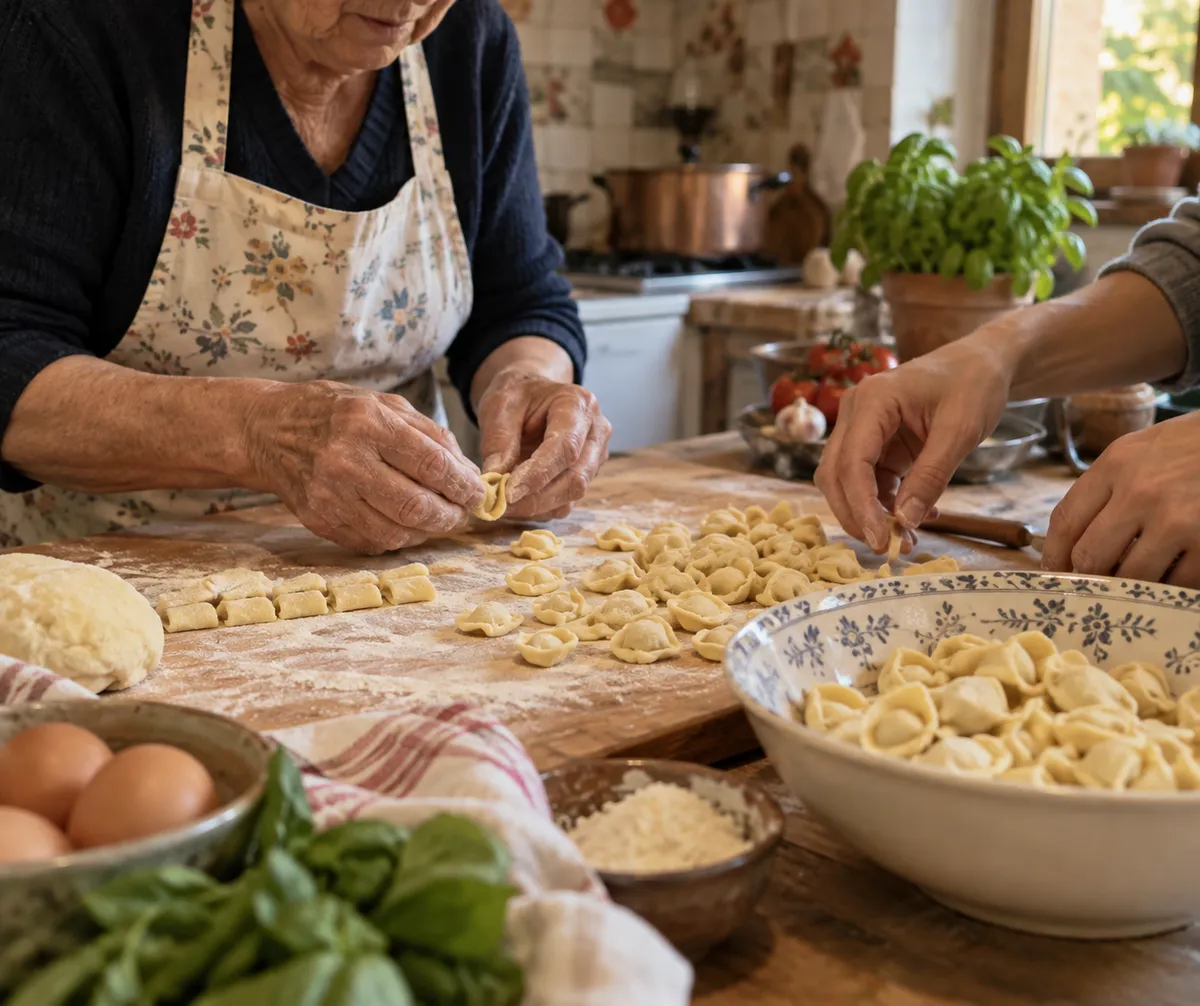
Vogue recently profiled Vicky Bennison, the author and creator of Pasta Grannies, a project that documents Italian nonne who keep handmade pasta traditions alive and share a bit of life wisdom along the way. Bennison also has a new cookbook, Eat Everything, and Vogue's piece includes a recipe from a grandmother named Rosa: cicatelli con ciambutella.
Here is what you can take from it: la dolce vita is less about aesthetics and more about a handful of kitchen habits you can start this week. I'm working from Vogue's reporting, so I'll stick to what it covers and flag where I'm offering my own take.
What Pasta Grannies Actually Is
Per Vogue, Pasta Grannies documents older Italian women who make pasta by hand and preserve culinary traditions. The project is as much about the women as the noodles: they pass along food skills and thoughts on how to live.
Vogue frames this as a timely counterpoint to hyper-optimized wellness trends. Interest in slow living, heritage cooking, longevity, and low-waste food culture is growing, and these grandmothers offer something different from a supplement routine: knowledge handed down through cooking.
Habit One: Cook With What You Have
The title of Bennison's new book, Eat Everything, points to a no-waste mindset. That idea translates easily to a beginner's kitchen, and it's also budget-friendly.
Some ways to try it (these are my suggestions, not quotes from Bennison):
- Before shopping, check what's already in the fridge and pantry and plan one meal around it.
- Treat a recipe as a template. If you lack one vegetable, use another similar one.
- Make pasta the base for odds and ends. It's forgiving and stretches small amounts of ingredients.
The point is a shift in attitude: leftovers and scraps are ingredients, not trash.
Habit Two: Stay Social Around Food
Vogue's piece highlights community and intergenerational knowledge as part of what the grannies represent. The practical version is simple: cook with someone. Invite a friend to shape pasta with you, ask a relative how they make a dish you loved growing up, or cook a bigger batch and share it.
It doesn't have to be fancy. Hands busy, people talking, food shared: that is the dolce vita in practice.
Habit Three: Keep Moving and Make Things by Hand
Handmade pasta is physical. Mixing, kneading, rolling, and shaping all take your hands and a bit of effort. Vogue connects the grannies to longevity as a theme. I can't say from the article that any specific habit explains their long lives, so take this as my observation: a kitchen routine that has you on your feet and working with your hands is a pleasant way to stay active.
Habit Four: Write Down the Recipes
The project exists because handmade food traditions are at risk of fading when no one records them. You can do a small version at home. Next time a relative makes something you love, note what goes in and how it looks and feels at each stage. Photograph their hands working the dough. A recipe that lives only in someone's memory is easy to lose.
Try Rosa's Cicatelli con Ciambutella
Vogue includes Rosa's recipe for cicatelli con ciambutella, a handmade pasta dish, as part of its feature. Since I can't reproduce the quantities and steps here without risking getting them wrong, I'd send you to Vogue's article for the full ingredient list and method, or to Bennison's Eat Everything.
To set yourself up for success with any handmade pasta recipe, a few general tips from me:
- Read the whole recipe first. Know the resting and shaping steps before you start.
- Clear a big work surface. Hand-shaped pasta needs space.
- Give yourself time. Your first batch will be slower than later ones, so don't plan it for a rushed weeknight. Weekends suit it best.
- Expect imperfect shapes. Uneven pieces are normal, and they still taste good.
Beyond the Travel Photos
La dolce vita often shows up online as sunny terraces and spritzes. The grannies suggest a more grounded reading: use what you have, share the table, work with your hands, and preserve what matters. None of it requires a trip to Italy.
This week, pick one: plan a dinner around what's already in your kitchen, or ask someone in your family to teach you a dish, and write down every step as they go.