Dark chocolate gets a lot of credit as a magnesium food, and it deserves some. But according to Health, it isn't the richest source. The outlet names six foods that contain more magnesium: pumpkin seeds, spinach, amaranth, Brazil nuts, chia, and soybeans.
This guide skips the nutrition lecture and gets practical. You'll leave with a simple way to work each of these six into meals you already make, using mostly pantry staples and almost no extra cooking skill.
One note up front: the Health piece, as summarized for us, doesn't give milligram amounts or serving sizes, so I won't invent any. Magnesium is often linked with sleep, stress, and muscle recovery in wellness conversations, but treat this as a food-first cooking guide, not medical advice. If you have a health condition or take supplements, ask your doctor or a dietitian about your own needs.
Pumpkin Seeds: The Easiest Swap on the List
Pumpkin seeds (pepitas) need no cooking at all, which makes them the lowest-effort way to start.
- Toast them: Heat a dry skillet over medium heat and stir the seeds for 3 to 4 minutes, until they puff slightly and smell nutty. Add a pinch of salt.
- Use them like croutons: Sprinkle over soup, salads, or roasted vegetables.
- Blend a quick sauce: Pulse a handful with cilantro, garlic, lime juice, and a splash of olive oil for a Mexican-inspired green sauce for tacos or eggs.
Keep a jar next to the stove and you'll use them without thinking about it.
Spinach: Cook It Down, Eat More of It
A big bag of spinach looks like a lot until it hits a hot pan. That's the trick: cooking shrinks it, so you eat more in one sitting.
- Garlic sauté (5 minutes): Warm a tablespoon of oil with a sliced garlic clove, add a few big handfuls of spinach, stir until wilted, and finish with lemon juice.
- Stir it into anything hot: Pasta, scrambled eggs, rice, lentil soup. Add it in the last minute.
- Blend it into smoothies: The flavor mostly disappears next to fruit.
Frozen spinach works too and is usually cheaper. Squeeze out the water before adding it to eggs or pasta.
Amaranth: A Tiny Grain Worth Trying
Amaranth is the one most readers haven't cooked. It's a small, seed-like grain with a mild, slightly earthy flavor, and it has a long history in Latin American and other cuisines.
A basic stovetop method many cooks use is about 1 cup amaranth to 2 to 2½ cups water, simmered covered for roughly 20 minutes. The texture ends up soft and porridge-like, a bit sticky, not fluffy like rice.
- Breakfast: Treat it like oatmeal with cinnamon, sliced banana, and a drizzle of honey.
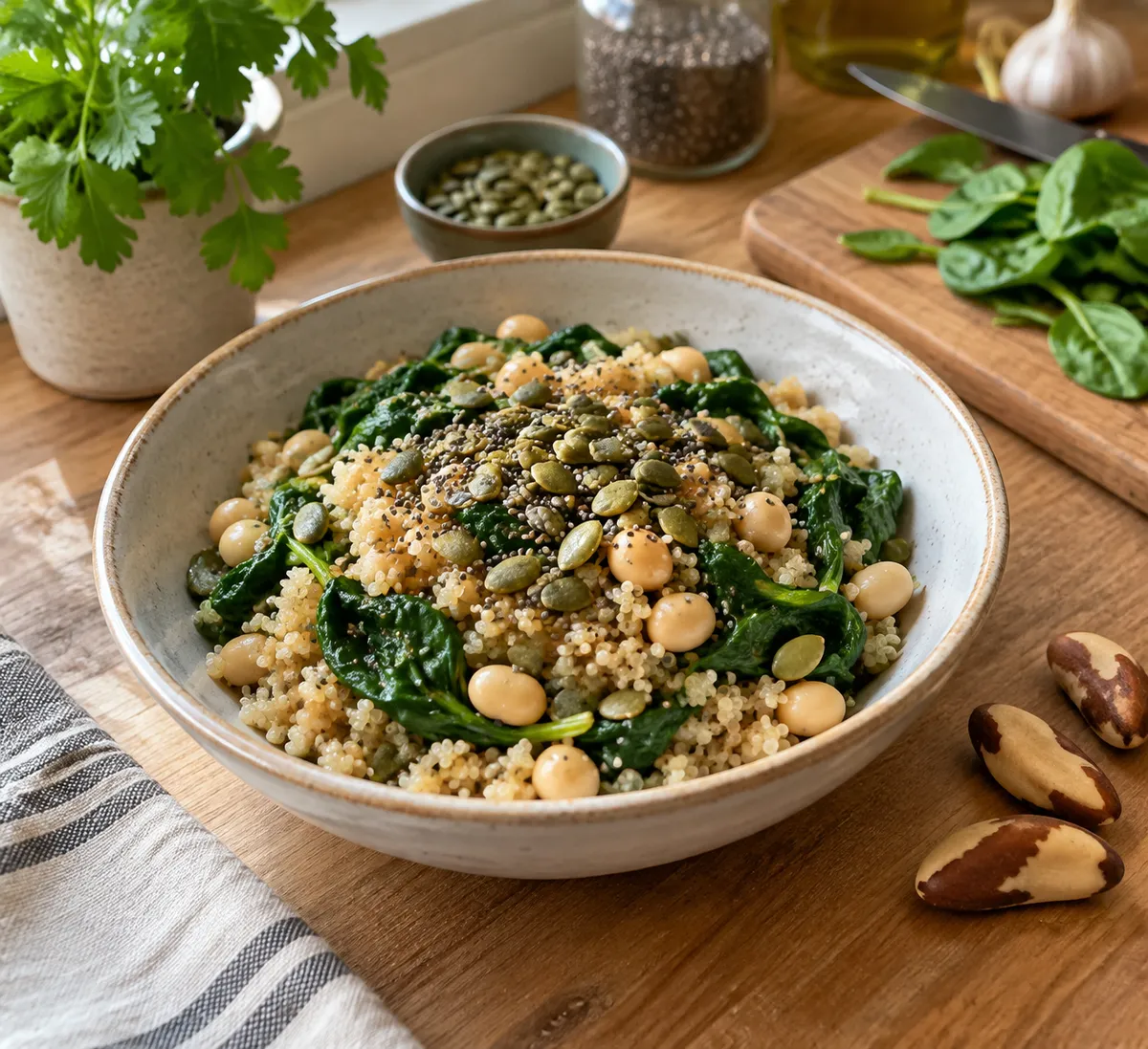
- Savory bowl: Top with a fried egg, sautéed spinach, and toasted pumpkin seeds. That's three foods from this list in one bowl.
If the texture is new to you, stir a spoonful into soups or stews to thicken them.
Brazil Nuts: A Little Goes a Long Way
Brazil nuts are large, rich, and creamy. That makes them satisfying in small amounts, and a good fit for snacking.
- Snack plate: Pair a few with an apple or dried fruit.
- Chop and sprinkle: Scatter over oatmeal, yogurt, or roasted squash.
- Make a rustic nut crumble: Chop finely, toast in a dry pan for a couple of minutes, and use as a topping for pasta or vegetables in place of breadcrumbs.
They can be pricier than peanuts or almonds, so buy a small bag and use them as an accent rather than the main event.
Chia: Stir, Wait, Eat
Chia seeds are the definition of beginner-friendly, since time does the work.
Five-minute chia pudding
- Whisk 3 tablespoons chia seeds into 1 cup milk (dairy or plant-based).
- Add a teaspoon of honey or maple syrup and a splash of vanilla.
- Let it sit 5 minutes, whisk again to break up clumps, then refrigerate at least 2 hours or overnight.
- Top with fruit.
You can also stir a spoonful into oatmeal, yogurt, or smoothies. Just add a little extra liquid, since chia soaks up a lot.
Soybeans: Edamame and Beyond
Soybeans show up in more forms than you might expect. The simplest is edamame, which is soybeans in the pod or shelled.
- Quick snack: Boil frozen edamame in salted water for about 5 minutes, drain, and sprinkle with flaky salt. This is a staple in Japanese izakaya-style eating.
- Add to fried rice or noodle bowls: Toss shelled edamame in during the last couple of minutes.
- Mash into a dip: Blend with garlic, lemon, and olive oil for a hummus-style spread.
Frozen shelled edamame is an affordable, low-prep freezer staple.
A Simple Weekly Plan
You don't need to eat all six every day. Try this rhythm:
- Morning: Chia pudding made the night before, or amaranth porridge on a slower day.
- Lunch: A spinach salad topped with toasted pumpkin seeds and edamame.
- Snack: A few Brazil nuts with fruit.
- Dinner: Garlicky wilted spinach stirred into whatever you're already making.
Prep once on the weekend: toast a jar of pumpkin seeds, cook a batch of amaranth, and make a pot of chia pudding. That's about 30 minutes total, and it covers several meals.
Keep the Chocolate
Nothing here means you should give up dark chocolate. Health's point is that it isn't the top source, not that it's a bad one. Think of it as a treat that happens to contribute, while the seeds, greens, grains, nuts, and beans do the heavy lifting.
This week, pick just one item from the list, buy it, and use it three different ways. That's how a new ingredient turns into a habit.